
Year-End Money Moves: 9 Smart Steps to Take Before December 31
Yes — there are year-end money moves worth making before December 31, and the reason is simple: several of them stop working the moment the calendar turns. Retirement contributions from your paycheck, tax-loss harvesting, Roth conversions, required withdrawals and flexible spending money all run on a December 31 deadline. Miss it, and the chance is gone for the whole tax year.
- Most year-end money moves must be finished by December 31, 2026 — 401(k) contributions, Roth conversions and required withdrawals all count in the year they happen.
- The 2026 401(k) limit is $24,500 ($8,000 extra at 50+); the IRA limit is $7,500, and IRA contributions can wait until April 15, 2027.
- Check your FSA balance now — unused health care FSA money is often lost at year-end.
- If you are 73 or older, take your required minimum distribution by December 31.

December 31 is a deadline. Photo: Nataliya Vaitkevich via Pexels
Year-End Money Moves for Your Retirement Accounts
Start with your retirement accounts. If you have a 401(k) at work, your 2026 contributions only count if they come out of a 2026 paycheck, so a mid-December change still reaches the last few paydays. For 2026 you can put in up to $24,500, plus another $8,000 if you are 50 or older, and workers aged 60 to 63 get a higher catch-up of $11,250. At minimum, get the full employer match.
IRAs work on a friendlier clock: you can contribute up to $7,500 for 2026 (plus $1,100 if you are 50 or older) any time until April 15, 2027. So if December is stretched thin, the IRA can wait — but the 401(k) cannot. The Wall Street Journal's year-end guide says the same: grab the match first, then top up what you can.

Only 2026 paychecks count toward your 2026 401(k). Photo: Towfiqu barbhuiya via Pexels
How Do Year-End Money Moves Lower Your Tax Bill?
December is the right month for three tax moves — you can finally see almost the whole year's income. First, tax-loss harvesting: if some investments have lost value, selling them can offset the tax on gains from your winners. Second, a Roth conversion: moving money from a traditional IRA into a Roth IRA means paying tax now so withdrawals later are tax-free — cheaper if this year put you in a lower bracket than usual. Third, defer income where you can — pushing a bonus or freelance payment into January can lower this year's taxable income. It must be completed by December 31; unlike IRA contributions, there is no April extension. Ameriprise's year-end checklist covers all three moves.
Don't Let Your FSA Money Disappear
This is the easiest money to lose, and the easiest to save. Health care flexible spending account (FSA) money is generally use-it-or-lose-it: whatever is left at the end of the plan year can vanish. Some plans allow a small rollover or a grace period, but many do not — check your plan's rules this week. Spend any balance on things you need: prescription refills, new glasses, contact lenses, or dental work.
What About Giving, Gifts, and RMDs Before December 31?
A donation to a qualified charity by December 31 counts for this tax year. Starting in 2026, even standard-deduction filers can deduct up to $1,000 of cash gifts ($2,000 for married couples). If you are 70½ or older, a qualified charitable distribution — paid directly from your IRA to a charity — counts toward your required withdrawal and is never taxed as income. The 2026 limit is $111,000 per person.
Financial gifts to family count too: you can give up to $19,000 per person in 2026 without gift-tax paperwork ($38,000 per recipient for a married couple), and the recipient must receive it by December 31. Cash gifts are different from presents under the tree — for those, our guide on how to budget for Christmas gifts without debt keeps holiday spending inside a number you chose.
Finally, required minimum distributions: if you are 73 or older with a traditional IRA or 401(k), the IRS requires a minimum withdrawal each year, due December 31. Miss it and the penalty is a 25% excise tax on the shortfall — reduced to 10% if you fix it within two years.
Have You Checked Your Budget and Emergency Fund?
Before the year ends, look at where the money went. Pull up three months of bank statements and add up the real numbers. A simple split helps: the 50/30/20 budget rule divides take-home pay into 50% needs, 30% wants and 20% savings and debt payoff.
Aim for three to six months of expenses one day, but $1,000 is a fine first milestone if you are starting from zero — it covers most car repairs and surprise bills without a credit card. If money is tight, our guide on how to save money on a low income has realistic weekly habits that free up cash.
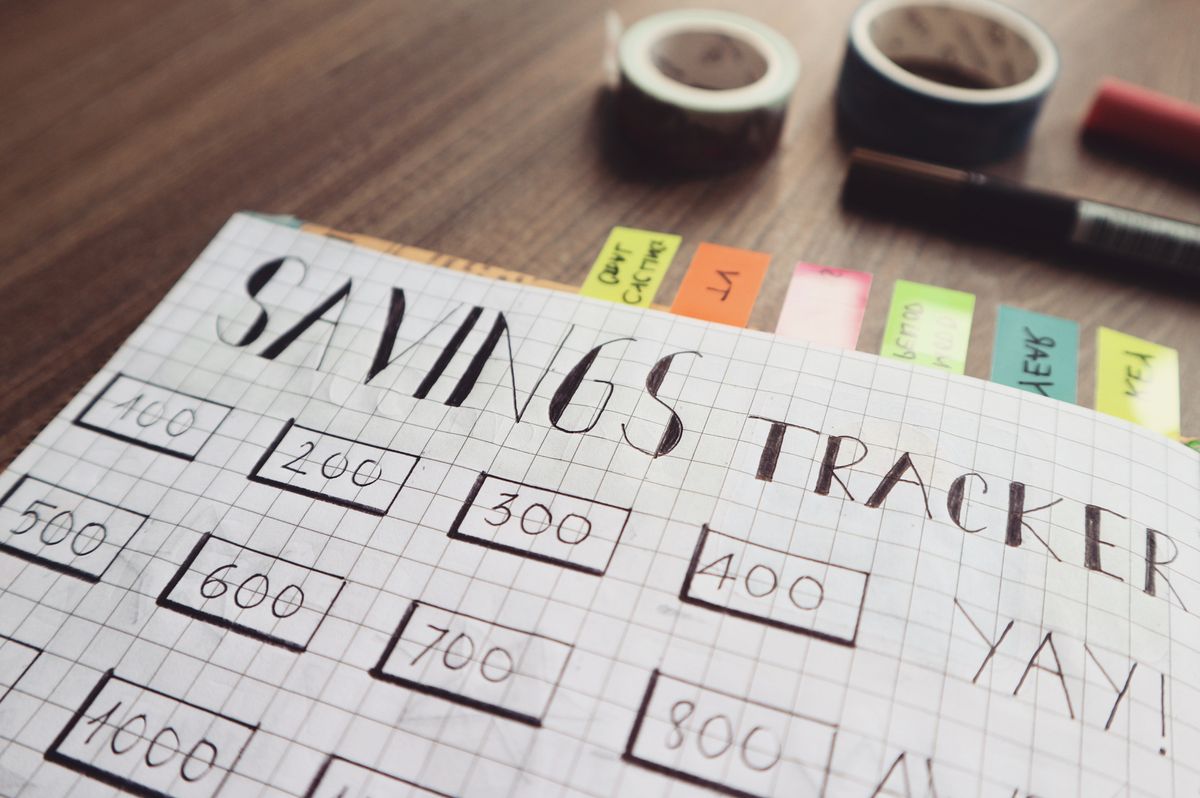
A written savings tracker turns a vague goal into a number you can watch grow. Photo: Bich Tran via Pexels
Final Thoughts
Year-end money moves are not about doing everything — they are about doing the few things that expire. Top up the retirement account, spend the FSA money before it disappears, and take the required withdrawal if one applies to you. Start with one move tonight — and if your budget needs a fresh shape, the 50/30/20 budget rule is the simplest place to start.
Frequently Asked Questions
What is the deadline for year-end money moves?
Most must be finished by December 31, 2026: 401(k) contributions have to come out of a 2026 paycheck, Roth conversions must be completed by December 31, and required minimum distributions are due the same day. IRA contributions are the exception — they can be made until April 15, 2027.
How much can I put in my 401(k) in 2026?
You can contribute up to $24,500 to a 401(k) in 2026. If you are 50 or older you can add an $8,000 catch-up contribution, and workers aged 60 to 63 can contribute up to $11,250 extra. At minimum, contribute enough to get your full employer match.
What happens if I miss my required minimum distribution?
Missing a required minimum distribution can cost you a 25% excise tax on the amount you should have withdrawn. The penalty drops to 10% if you correct the mistake within two years. If you turned 73 in 2026, your first distribution can wait until April 1, 2027.
Do I lose unused FSA money at the end of the year?
Often yes — health care FSA funds are generally use-it-or-lose-it, so any balance left at the end of the plan year can be lost. Some plans allow a small rollover or a short grace period, so check your plan's rules and spend the balance on eligible expenses before the deadline.
Disclaimer: This article is general educational information only, not financial advice. Consider speaking to a qualified financial adviser or tax professional before making major money decisions.
Sources: Ameriprise Financial — 2026 Year-End Financial Checklist; The Wall Street Journal — Year-End Personal Finance Moves; Medium — Year-End Retirement Checklist; LA Federal Credit Union — 5 Smart Money Moves.
No comments